


If you’ve spent any time in markets over the last 6 weeks, you’re likely familiar with the current crisis in oil prices.
Now, we’re not going to give the 10,000th macro opinion on this or provide any political views one way or the other, but this is a uniquely interesting event from a quantitative perspective. Some things here haven’t happened before, but some things have, and they are shockingly predictable.
Instead, we’re going to strip this down to what’s actually measurable and focus on the parts of this crisis that aren’t being talked about. By the end of this, you’ll walk away learning something new and you’ll know exactly what to watch going forward.
So, without further ado, let’s dive right in.
What Does The Options Market Think?
This wouldn’t be a good quantitative view at all if we didn’t first check out one of the most informed and sophisticated sources of information:
The Options Market
To begin, we need to get a view on the implied volatility of Crude Oil futures. This is basically a single number that represents how much the market expects prices to move by in one year:
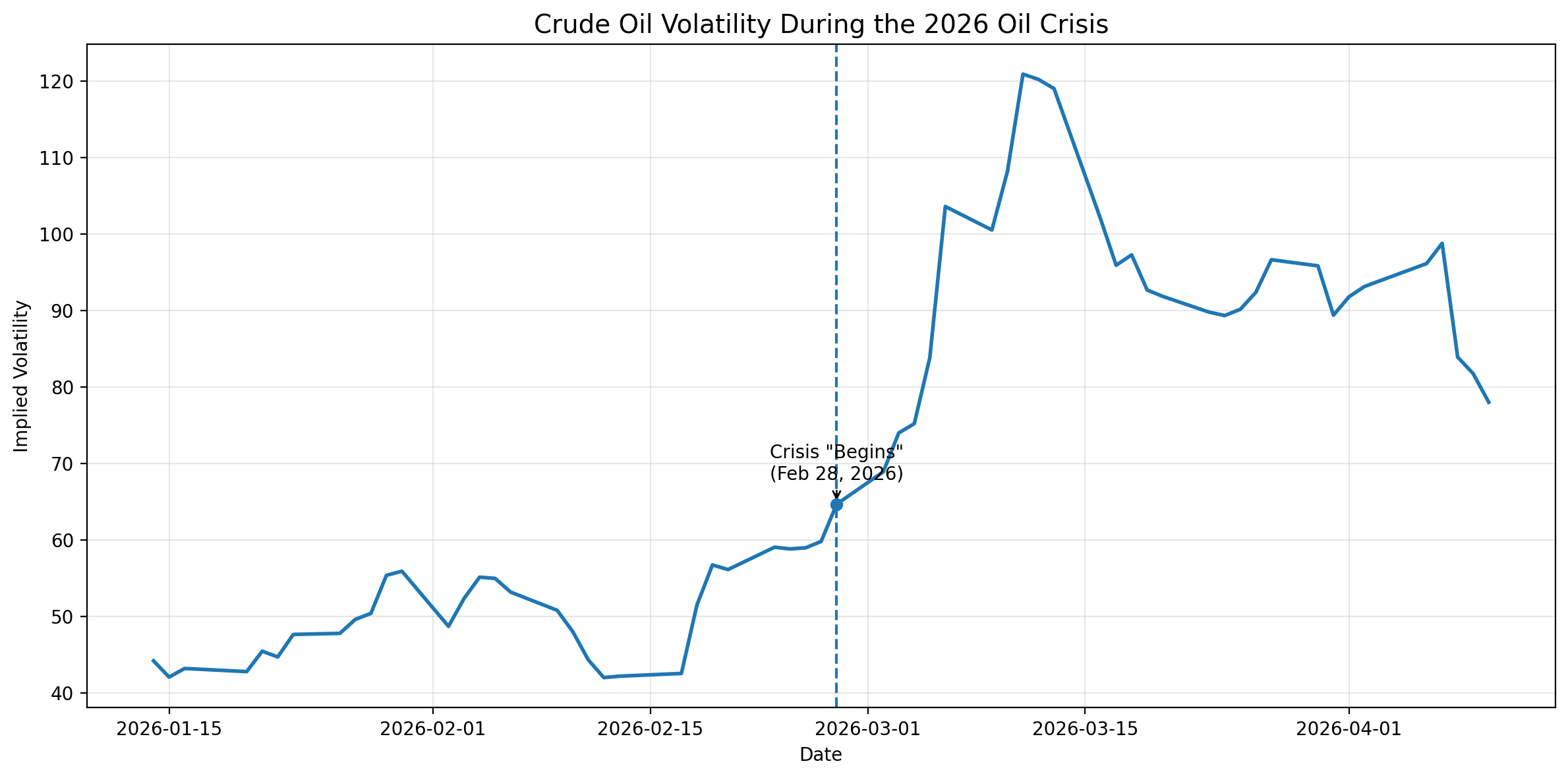
As of writing, the Cboe Crude Oil Volatility Index is at 84.
This means that the market thinks the price of crude oil futures will move up or down by 84% over the course of one year.
For context, the long-run average sits around 30, so the market is pricing in roughly 2.5x normal uncertainty.
Now, most times, this number tends to be a bit overstated. So much so that it’s become a widespread industry practice to sell options that are priced with that number, viewing the options as being rich (overpriced).
It’s basically collecting premiums for things that never happen and the core of a multi-billion dollar industry.
Let’s take a look at how business is doing now:
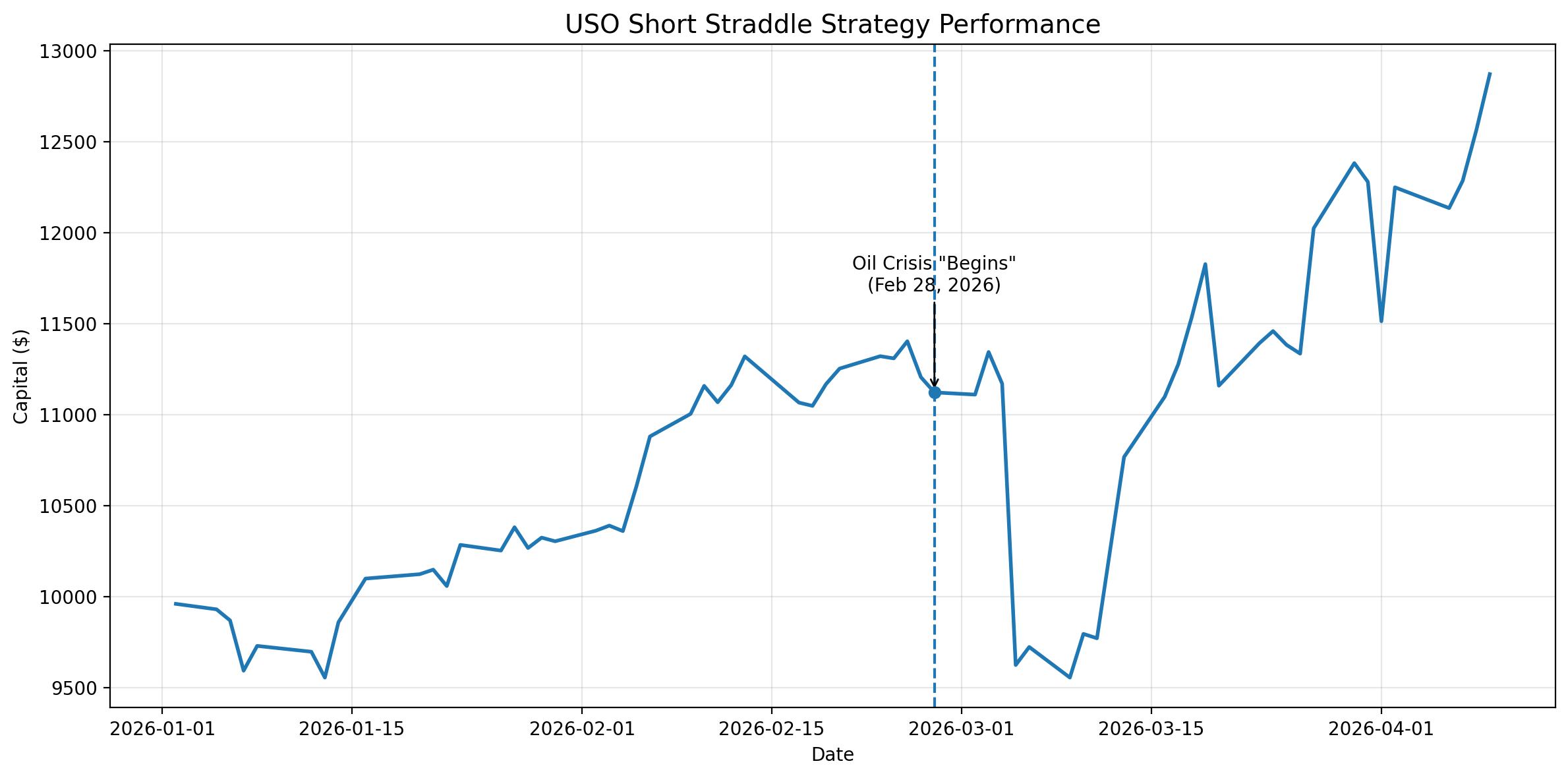
Pictured above is the performance of a short volatility options strategy, but applied to USO, a liquid Crude Oil ETF.
For context, a short straddle is a relatively simple strategy: if the market thinks the asset will move up or down by 10% (implied vol), but it actually moves by 3% (realized vol), you profit.
So, as you can see, despite the headline-packed year and very-real things happening, it has been a rather profitable year for cooler heads.
Conversely, for those more anxious and actively betting that major things will continue happening, it has been a rather unfortunate year:
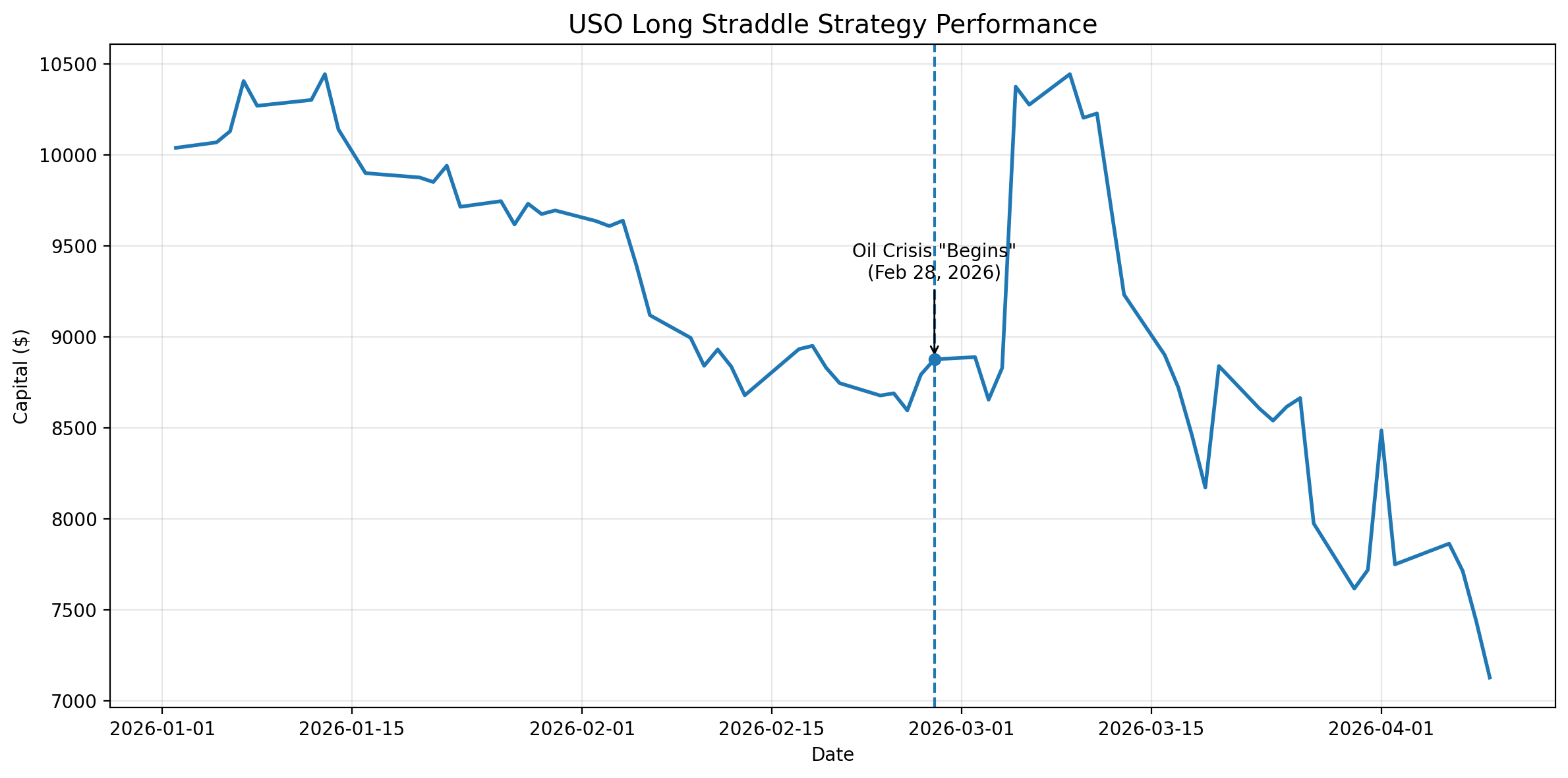
Interestingly enough, this “nothing ever happens” approach doesn’t only come up in options markets.
In a study across millions of Polymarket bets, it was found that “No” bets win a surprising 73% of the time:
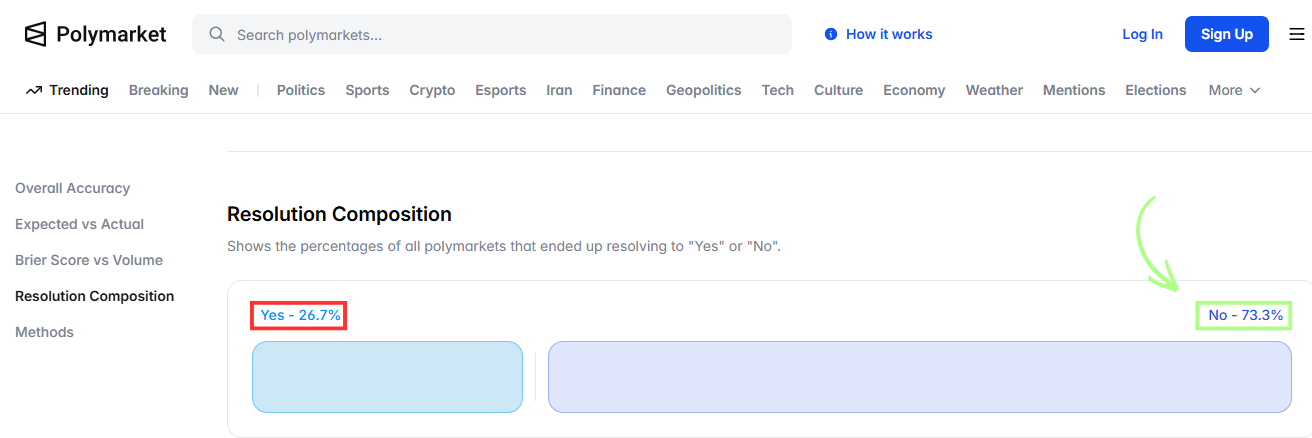
So, our first takeaway is that even in times of apparent crisis, taking the view of “the worst case scenario won’t come true“ is generally what tends to work out.
With that front covered, we then pulled some more data and that’s when things really got interesting.